Saturday, January 25, 2020

Genre Research: Instant Family

One of the movies Leila and I reviewed was called "Instant Family". The reason we chose this movie because it is classified as comedy and it is accessible on Hulu. Also, this movie is within the time restraint since it was released in 2018. The following information is the conventions for this particular movie.

Camera Angles, Shots & Movements: 
Angles: Most of this movie was filmed at eye-level. 

Shots: There were a variety of shots used to make the conversations and dialogue seem more interesting. For instance, the scene where Ellie and Pete- the main characters- were debating about adopting children. Some of the scenes went from over-the shoulder to medium shots to medium- shots to long shots and to close-ups. Other shots that were included were wide-shots and two-shots. There were very few establishing shots. 

Movements: There were three primary camera movements present: tracking shots, tilts, and zooms. The tracking shots were used to film the walking scenes and the zooms were used to emphasize the internal struggles and emotions: confused, guilt, hope, of Ellie as she debates whether or not to adopt kids. 

Mis-En-Scene: 

Costumes: In this movie, the costumes consists of normal clothes because the characters are a couple in present- day United States. We noticed most of Ellie clothes were free flowing or a hipster feel. We think this costume choice is supposed to express the type of person Ellie is, open-minded. 

Lighting: The two primary lighting designs were bright with few shadows and a darker lighting design with more shadows. We think the lighting designs are supposed to help develop and set the tone of the scenes. For instance, in the beginning scenes, the lighting design was bright and a few shadows to illustrate the excitement the characters are feeling when they are about to flip a house. However, the lighting designs changes from bright to ominous when Ellie and Pete are discussing adoption. The lighting design sets the tone of the scene to be heart-breaking and sad because the main character is viewing the profiles of foster kids. The color designs of the scenes help develop these tone shifts. The scene of the decision of adaptation had a duller colors to demonstrate the seriousness of a life-changing decision making. 

Acting: In this movie, Mark Walhberg and Rose Bryne were the main characters. Both Mark Walhberg and Rose Bryne has experience in comedies. Mark Walhberg starred in Daddy's Home 2, Daddy's Home, Ted, and Entourage. Rose Bryne starred in Neighbors, and Like a Boss with Tiffany Haddish. Since they have experience as comedians or filming a comedy movie, their jokes did not fall flat. In addition to the comedian, Octavia Spencer played a secondary character who is one of the foster system's workers. In her scenes, she was able to have heart-felt moments where she had to tell news to the foster kids, their birth mother will not take them back. Due to her experience in heart-breaking stories like The Help, Black or White and The Gifted, she is able to act in emotional scenes where it impacts the audience. 

Make Up: Most of the make up consists of natural makeup. 

Props: Props depended on the setting of the scene. In the beginning scene, there were remnants of broken furniture and old couch's cushions to demonstrate the broken home needs renovation. In the revocation scenes, there were props of hammers, mallets and safety googles to illustrate a construction like environment during renovations. 

Set-Design: The set design differ in each scene. In the beginning, the scenes switched from an old home to the main character's home to the adaptation center's orientation. Each scene had different props to make the settings come to life. In Ellie's and Pete's home, there were props of a piano, food, a couch, pictures, and a dog to make the setting feel homey. 

Sound: 
The main types of sounds that were used were diegetic and non-diegetic sounds. Most of the sounds came from dialogues and conversations amongst the characters. Other diegetic sounds include the sound of people, cars, the door opening and closing, and the sound of a nail gun. One of the most notable scenes with a signifcanct amount of diegetic sounds is the breaking scenes. This scene is where Pete and Lizzy, one of the foster kids, were breaking the old kitchen to begin renovations. The sounds of glass shattering, wooden splintering, plaster chipping and grunts can be heard in this scene. These sounds help make the audience experience the actions and the built-up rage within Lizzy. The non-diegetic sounds is the soundtrack and sound bridge . During some scenes, there is sound bridges that connect the two scenes while there is soundtrack to help set the tone. In the scene where Ellie is helping Lizzy to detangle her hair, the soundtrack is calm and serene. This soundtrack help emphasize the peacefulness of having two parents. graphic match from the younger main character to older, 


Editing: 
The most common editing techniques are reaction shots, eye-line match, and shot-reverse-shot. As we previously mentioned, comedies are driven by dialogues. These editing techniques help film a conversation and make the audience experience in the different conversations amongst the characters. For an example, the scene where Lizzy is brushing her hair with the detangler. The scene begins with Lizzy looking down then, it transitions to an eye-line match of a pink detangler with a sticky note with a heart. This was to help progress the transformation of Lizzy because Lizzy was stubborn in accepting foster parents. Other common editing techniques were cut away/ inserts and graphic matches. For instance, when Pete is retelling a flashback, he turns from present day Pete to a younger version of himself. This graphic match help transition in the flashback more smoothly and less choppy. 

Elements We Like: 
The main elements we liked is the comedy. This comedy was more sarcastic and more realistic. The comedy was centered around situation than sexual references. For instance, the confrontation scene. This scene is where Ellie and Pete are asking advice from a couple who inspired them to adopt. At the end of the scene, Ellie is hugging them. The last line is where the husband say, " Let hurry back inside" because they felt scared and awkward for this strange woman kissing and hugging them. 

This is the movie poster for, "Instant Family."


Genre Research: Overboard

One of the movies Leila and I reviewed was called, “Overboard.” We viewed the newer version that came out in 2018. We believed that this was a good movie to choose because we had easy access to it and its genre was comedy, which were the two things we were looking for. Also, the movie is within our time restraint because it was released in 2018. The following information is the conventions for this particular movie.

Camera, Angles, Shots, and Movements:
Angles: The main angle used in the film is eyeline because there is a lot of dialogue and it helps the audience feel as if they were a part of the conversation.

Shots: Throughout the movie, there were establishing shots to show the audience the location of the characters. For example, there was an establishing shot of a yacht to show that the next scenes will take place on it. There were also over-the-shoulder, wide, medium, and long shots. The over-the-shoulder shots were mainly used during the characters’ conversations.

Movements: Some movements the film included were pans and tracking shots. For example, there was a pan on a car while it was passing by. The tracking shots were used to make the film flow better.

Mis-En-Scene:
Costumes: The film included a range of costumes, from beachwear to formal wear. In the beginning, one of the main characters is seen wearing a swimsuit, while the other is in a work uniform. The different outfits at the start of the movie demonstrate the different lives the two characters lived. A little after it shows one of the main character’s families wearing expensive clothing. As the movie continues the characters start to wear more casual, everyday clothing.

Lighting: There was a great use of bright and natural lighting throughout the movie. This type of lighting was used to make a more realistic environment. The lighting also makes it easy for the audience to observe the actors’ emotion and reactions, which can further the impact a joke has on the viewers.

Acting: In the film, the main characters, Kate and Leonardo, were played by Anna Faris and Eugenio Derbez, who both have experience in playing comedic roles. Eugenio Derbez is also a comedian. These backgrounds meant that they both knew how to be comedic and tell a joke, which is needed in the film. In the beginning, Leonardo’s character acts privileged by doing things such as firing the people who work for him without a second thought. In the middle, his character becomes confused and clueless which the actor portrays well by making mistakes that the audience laughs at. By the end of the movie, Leonardo acts betrayed because he was lied to. In the beginning, Kate is portrayed as someone who has to constantly work and is stressed. This can be seen by the audience when she is working multiple jobs and is getting annoyed at things such as when her mother tells her she can’t watch her kids anymore after promising she would. In the middle, she starts acting deceitfully by making Leonardo do all her work for her and to be another paycheck. In the end, her acting becomes more regretful because she is feeling guilty about lying.

Makeup: Very little makeup was used in the film; however, it did include natural makeup and makeup that made some of the characters appear to be exhausted. For example, after Leonardo’s first day at work, makeup was used to make his character look sweaty and dirty.

Props: There were different props used during the duration of the film. The type of props used depended on the scene. For example, Leonardo gave Kate frozen yogurt, which is what Kate claimed to eat with him before his amnesia, when he was talking about being a better husband. Other props that can be seen in the movie are cleaning supplies, construction supplies, paper, pencils, and a first aid kit.

Set Design: The main locations at the beginning of the movie was a yacht and one of Kate’s workplaces. The inside of the yacht was set up to look expensive. The furniture is extremely nice, and everything was super clean. At Kate’s pizza workplace the set design included many tables, chairs, and kitchen supplies. Towards the middle of the film, the main location is Kate’s home. The set design of the inside of her home is very disorganized. For example, there are boxes everywhere. Other locations included a hospital, grocery store and Leonardo’s parents’ house. The parents’ house is set up to look very luxurious. All the furniture in the house looks very expensive, there is also a piano and crystal chandeliers.

Editing:
The movie included types of editing an audience would usually see in a film with lots of dialogue. For example, the film included shot reverse shot and reaction shot techniques. These two shots were mainly used during the dialogue scene so the audience could see the characters' reactions to each other. For example, these techniques were a part of the two main characters' argument scene where they are yelling at each other. The techniques allow the audience to see the characters’ anger during the disagreement. There was also a use of a fade in and out in the production. These were used when Leonardo fell unconscious and when he woke back up again. The film’s editing also included action matches and jump cuts.

Sound:
The film mostly consisted of dialogue between characters. The dialogue was used to create the story and to mainly add humor. Ambient, diegetic and non-diegetic sound were also included in the movie. An example of ambient sound is the noise coming from a car driving by. One use of diegetic sound is noise coming from the main characters’ television. An example of non-diegetic sound is the music that was playing at the start of the movie.

Elements We Like:
The main elements we enjoyed in the comedy were the unnecessary reactions and occasional random jokes. An example of an unnecessary reaction is when Leonardo got a small cut on his hand, so he started to panic saying that he was going to faint and asking if he needed a hospital.

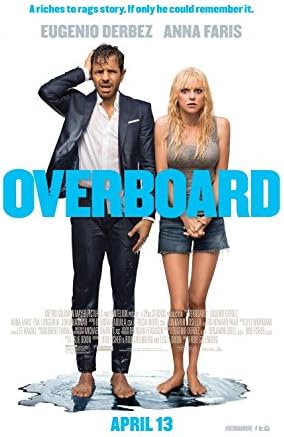
This is the movie poster for "Overboard."

Thursday, January 23, 2020

Decision Time: Final Genre

After researching the genres, Leila and I came to the conclusion: comedy will be the genre of our final task. Although comedies are difficult to end at two minutes, we feel the production process will be more fun to produce and we are able to utilize all the tools, information, and creativity.Also, we are both interested in the comedy genre. So, we felt this would be an excellent opportunity to learn about the comedy genre. Out of the three genres we researched, we felt comedy was the easiest to produced. If we did a movie musical,  it is more difficult to choreography dances to original songs. Also, the process will be time consuming and will be extra work. If we choose horror, it would be difficult because it is more difficult to film things during the night and the acting would seem artificial.

As we were researching the three genres, we felt we needed to add a sub-genre because most of the films include two genres. For instance, Romantic Comedies. We would like to include action as apart of the comedy genre because our pitch idea includes spies.

Genre Research: Horror & Comedy

In AICE Media Studies class, Leila and I researched the second  and third genre of films: horror and comedy. Like the previous blog, the information gathered for the horror genre was used from the previous assignment. The information gathered for the comedy genre is new knowledge and extra information was gathered for the horror genre.  

GENRE: HORROR 
Camera Angles, Shots & Movements:
Angles: In the horror genre, camera angles usually are high angles, birds-eye view, and low angles. The high angles and the birds-eye-view creates a scene where the subject is being looked down upon. This helps create a powerless/ helpless tone since the angles imply a bigger/ more powerful being. 

Shots: In the horror genre, the camera shots include: over- the- shoulder, point of view, and close-ups. 

Movements: The movements are usually handheld, pan, tracking shot, trunk shot and tilt. Pans and tracking shots help develop a fearful tone because the protagonists are usually running away from their attacker. The trunk shots are used to develop a dramatic event like a kidnapping scene. Shots with handhelds have the most impactful effect on the audience because shakiness allows the audience to experience the thrilling chase of a killer; this create fearful and creepy tone. 

Mis-En-Scene: 
Costumes: In most horror films, the main characters often wear normal clothing. Usually, the antagonists would be wearing duller or white ripped clothing or black clothing to create an ominous tone. Costumes would depend on the sub-genre of horror. For instance, if it was a Scifi-horror film ,  there would be costumes that is more alien like.

Lighting: Horror typically has silhouette, spotlighting, and underexposure lighting. Silhouette lighting is used to reveal of conceal subjects and spotlighting  is where a certain subject is illuminated with a spotlight to direct attention to the subject. Underexposure is when there is purposeful inadequate exposure to light, in order to draw attention away from the most necessary while also keeping what's most important hidden from the view. 

Acting: The antagonists would have to act stealthful, abnormal or  supernatural to create a sense of fear in the audience. They have to act in a way that makes it convincing they are the killers. The protagonists would have to act frightened towards the murderer and chasing scenes. 

Make-Up: The makeup can vary from ordinary makeup to extreme makeup like clowns. Sometimes, makeup would be added to create a paler complexion to create a ghost-like appearance. Also, makeup can be used to illustrate fatigue and exhaustion from a chasing scene. Plus, it is most importantly used to create fake- injuries real. 

Props: This would includes weapons such axes, chainsaws, and knives. 

Set Design : In most horror films, the set design depends on the type of horror genre. For instance, the movie "It" would take place in a neighborhood. Usually, the set design would look abandoned establishments or a camp ground. The colors are used duller and less vibrant. 

Sound: 
In horror, they use both non-diegetic and diegetic along with ambiance, and no sound. Incidental and no-sound are used to emphasize and particular moments in horror to create suspense and a thriller tone. 

Editing: 
A significant amount of jump cuts are present in horror films because it is used to show the duration of the chasing scene, and  the exhaustion of the characters. Also, there are multiple shot-reverse-shot and reaction shots between the victims and the killer to emphasize the fear and to create suspense. Moreover, there are eye-line matches. For instance, if a character hears creaking sound in the hall, the next shot is the hallway. Furthermore, there are cutaways/ inserts to create suspense. An example is a scene  where the phone is ringing and then it cuts to the person picking up the phone.  Minor editing techniques are action matches. An example of this is where a girl is swinging on the swing and then the next scene is the killer swinging a knife. 


Elements We Do Like: 
•The feeling of being scared. Most people like the horror genre because it uses jump scares to create an adrenaline rush. 
•Suspense creates a sense of curiosity for the audience, which makes it an enjoyable element. People like the tension that suspense creates. It can also make the audience more intrigued in the film.
•Some costume  and makeup in the horror genre create amazing illusions and images that make the audience want to know how they were able to do it.


Elements We Do Not Like:

•There are elements that we dislike about horror. This includes the unoriginality, predictability, and unrealistic scenes/characters.
•Many aspects to horror aren't real. The main area is the over exaggeration. For instance, when the character's reaction to the killer can be artificial and exaggerated that it becomes less thriller. When things become to unrealistic it prevents the impact of horror. 
•Many horror movies lack originally. They are usually about the same thing and have very similar events to other films. Since there is unoriginally it makes the film very predictable.

Examples of unoriginal lines/ events: 
1) The character opens the door even though they have a feeling not to. 
2) Most of the dumb characters would go into the basement or a haunted mansion. 

Examples of Horror: 
1) Pet Cemetery (2019)
2) A Quiet Place (2020)
3) It (2017)
4)The Shining (1980) 
5)The Conjuring (2013)


GENRE: COMEDY 

Camera Angles, Shots & Movements: 

Angles: Most of comedies are filmed at eye-line level. 

Shots: There are a variety of camera shots. These shots include close-ups, medium-shots, long shots, and establishing shots.  There are significant amount of establishing shots to show changes in locations. Medium-Shots are used to show the emotions and expressions of many characters after a joke is told. 

Movements: The most important camera movement is tracking shots because it helps make the scene more natural. The are a few pans and tilts. 


Mis-En-Scene: 


Costumes: The subjects would wear a variety of costumes. Typically, costumes are causal/ normal day to day clothes. Formal wear and over-exaggerated outfits are also costumes seen in comedic films. 

Lighting: The lighting design is often bright, natural and consist of little shadows. This creates a realistic environment and help establish the changes of time. The color design of the lighting consists of warmer tones to convey happy and cheerful emotions. Most of the scenes are shot in the daylight. 

Acting: In comedies, actors/ actresses have to naturally be funny. Usually  in comedies, directors would use comedians because they know how to be naturally funny and can do improve. For instance, the movie Night School. The main protagonists are Tiffany Haddish and Kevin Hart, two famous comedies that are known in all age groups. Since they are comedians, the jokes are more natural and effective. 

Makeup: The subjects would wear natural or party makeup since most comedies take place in current day society.

Props: Along with makeup and costumes, there are a variety of props. The props depends on the location of the scene. Since most audiences enjoy people getting hurt, props would be used to create these comedic moments. For instance, someone would trip over their own shoes and land in the trash can.

Set Design: Public settings that are bright; towns, cities, well populated areas, high schools, homes, bars, suburban events, neighborhoods. Comedies take place in any populated areas. 

Sounds: 
One defining element of the comedy genre is the pauses. Typically, there would be pauses in sound before and after a joke to allow the audience to recognize the joke and react to it or provide suspense for the punchline. There are significant amount of dialogue and diegetic sounds within the environment. Sometimes, sounds are over-exaggerated to add a humor effect. An example of this is  in the Three Stogies. There would be sound effects of violence to create a humorous tone.

Editing: 
After researching different movies, the comedy genre has less of a variety editing transitions. The primary editing techniques are shot-reverse-shot, eye-line match and reaction shots. Since comedies are based on dialogue as their main element, there are significant amount of these particular features to enhance the pain or joke. In Night School, there were multiple shot-reverse-shot in a boxing scene with Kevin Hart and Tiffany Haddish because it was meant to emphasize Kevin Hart's character's pain during the boxing match. Minor editing techniques include parallel cutting and split screens. This depends on the type of comedy and the storyline. For instance, in the Revenge of the Bridesmaids, there was a split screen between a cop and a bridesmaid arranging a date.

Elements:
The main element that allows comedy to be funny is the timing. Without timing, jokes and stunts will fall flat. As we previously mentioned before, directors would use comedians in their movies because they know how to deliver a joke. Another element of comedy is slapstick. This is where performers would exaggerate an action or a series of jokes to get a reaction from the audience. Situational comedies involve the main character failing to adjust to their environment. The last element is farce. This elements can include wacky/ unusual plots, mistaken identities or misunderstandings.


Elements We Like: 
We like how the timing and the jokes are intertwined to enhance the jokes and how comedies are used to add humor to the most serious of topics. In addition to the timing, situations and violence allows the characters to be expose to something not depressing. Moreover, the plot of comedies are not too over exaggerated or dramatized.

Elements We Do Not Like: 
 The elements we dislike are unoriginality, predictability, and unrealistic scenes/ characters because it gets repetitive and not entertaining. For instance, a person running into a pole on accident. It is predictable and can be flat if it is not performed properly. 
•
Examples: 
1)Booksmart (2019)
2) Night School (2017)
3)Spy Who Dumped Me (2018)
4) Instant Family (2018) 

Genre Research: Movie Musicals

The first genre Leila and I researched was Movie Musicals. The information listed down below is from a previous assignment where we researched the elements of a movie musical.

Camera Angles, Shots, & Movements:
Angles: Most movie musicals are shot at eye-level but, there are some scenes where they are filmed at a high angle. High-Angel scenes include the actors and the background dancers during the huge musical numbers.

Shots: Camera shots in musicals are usually wide shots and medium shots. Occasionally, there will be close-up shots to emphasized the characters' expressions and emotions. This helps to develop the themes of  the scene taking place.  For instance, camera shots are focused in bright and upbeat musicals. There are a good amount of crane shots which allows the audience to put the main character into perspective with their environment. 

Movements: Most of the camera movements are pan and tracking shots. Since movie musicals are driven by music, cameras are choreographed to the follow the choreography. This creates a fluid nature and enhances the reality of the world musicals create. Camera movements are used to motivate coverage while remaining grounded to the narrative.

Mis-En-Scene:
Costumes, Make-Up, Props & Set Designs: Movie musicals have a variety of different Mis-En- Scene elements since they can take place in different time periods and locations. Usually, the costumes, makeup and props would match the time period the musical take. For instance, in Grease, most of the extras and Sandy would wear ankle-length skirts because that was the fashion in 1950s. Another example is the Greatest Showman.  In the shipping company scenes, the props are not as advance and had an industrial feel because it took place in the 19th century. Typically, the set designs are over-the-top and the color design is colorful and consists of warmer tones. The scenery of the location can transform the realistic picture into a dreamlike state. An example is Mamma Mia. In Mamma Mia, there were scenery shots of Greece to demonstrate the quaintness of the village and how traditional it remains. 

Lighting: In film musicals, high-key lighting is used to make the shot appear brighter and contain few shadows. This allows the scenes to have a bright, optimistic and cheerful tone. Another common lighting used in film musicals is low-key lighting. This lighting produces large, dark shadows within the frame. This creates a more serious and dramatic effect. The last common lighting is three-point lighting. Three-Point Lighting produces faint shadows which creates more depth in the frame. 

Acting: The acting is usually dramatized and amplified. During the climaxes or sad scenes, the acting would be over the top to create an impactful scene. For instance, during "On My Own" in Les Misérables, the voice-breaking and the attempts of the character to stop crying are amplified to impact the audience to have a sympathetic mood. 

Editing:
One of the main editing elements in musicals are parallel editing. This is done to show the main characters' expressions and emotions either in song or in normal dialogue. This is seen in Hairspray where Tracy and Penny are rushing to the auditions. Then, the shot transitions to the contestants getting ready and then back at Tracy running to the auditions. Another example of parallel editing is in Grease. During "Summer Nights", there is parallel editing between the Pink Ladies and the Thunderbirds where Sandy and Danny Zuko are retelling their summer experiences to their respective groups. Other main editing elements are zooms in/outs, jumpcuts and reaction shots. These editing techniques help emphasize the emotions a character is going through or symbolically show how a character is isolated. Jump cuts allow the dancing to be concise and look appealing because no one would want to watch someone dance for ten minutes. Reaction shots help develop the secondary characters' emotions and eyeline- matches help develop a character's experience. For instance,in High School Musical 2 and Hairspray, both the main characters look  up, then it cuts to the clock and then back onto them. This demonstrates the characters' boredom. There a significant amount of action matches because it transitions into a new scene while the dancing stays the same.

Sound:
Most film musicals use diegetic sounds and non-diegetic sound. This includes the singing, dancing, and the regular sounds created by objects. The non-diegetic sounds include the soundtrack and the narration of the film. Sometimes film musicals would use scores and the incidental sounds are used to enhance and dramatized the events. Songs are crucial for movie musicals because it aids in advancing the plot and developing  the characters. 

Elements: 
Musicals are the only genre that violates the classic narrative cinema. The main element is how characters express themselves through songs and dance. The audience can better understand the characters' feelings and personalities. This allows the audience to humanized the fantasized experience. Songs in film musicals help drive the plot and develop film's characters and themes.

Elements We Like: 

•In film musicals, characters must express themselves through song and dance.

•Songs in film musicals help advance the plot and develop film’s characters and themes.

•The film’s usage of Mis-En-Scene makes the audience experience the  musical’s world.

Elements We Do Not Like: 

•The themes of musicals are often optimist, happy , bright and unrealistic.

•Some musicals are overfilled with songs that  distracts the audience from the story.

•Some songs are unnecessary and can move the story through dialogue.

•Sometimes, the songs can be repetitive and sound similar. 

Examples: 

1) The Greatest Showman (2017)

2) Mamma Mia! Here We Go Again (2018)
3) Grease (1978)

Friday, January 17, 2020

Pitch Ideas for Final Task

Yesterday in my AICE Media Studies class, my group mate Leila and I were brainstorming pitch ideas for our final task. We were able to narrow it down to two ideas.

Pitch 1:
Pitch 1 is a comedy spy movie where two teenage spies are on a mission to track down a briefcase. During the process, their friend gets kidnapped.

For this pitch, we were thinking to go in the direction where the spies would have a big blown out which would result in a terrible event. This allows the antagonist to kidnaps one of the spies and the other spy has to save her friend while protecting the special item. We pictured the ending would have the two spies reconciled and the antagonist- the  coordinator of the spy organization- will go to jail/ dies. This is the story-line we were thinking of.

For the opening sequence, our plan is to film two spies preparing to go on their mission. For about twenty to thirty seconds, there will be a montage of the spies gearing up and the control person giving instructions. During this montage, one of the spies will keep messing up. For instance, one of the spies will dress in white and the other spy would look at them weirdly. The spy will realized her mistakes and quickly rushed to get ready in ten seconds. The instructor will comment and ask their status report. In that scene, it is revealed they are ten minutes late. Then, it will show the girls following and carefully watching the target. The last scene would probably have the instructor staged a her own  kidnapping and the spies are  wondering where she is.

This is a good place to end the two minutes because it leaves the story on a cliffhanger.

Cons for Pitch 1: 
This could be a bad pitch because we would need to ask city leaders to use public property as our locations/ settings. This is difficult because the city has other priorities to attend to and theoretically their response would take forever. Also, the pitch seems unoriginal because no one  would want to watch spies gear up for two minutes. Furthermore, we would need to film everything within a limited time period because the lighting depends on the weather. 

Pros for Pitch 1: 
One of the main pro is it allows us to demonstrate our filming and editing skills because we would probably include  parallel editing, voice-overs, a montage, and probably split screen. Another pro is we can secure the actors and the costumes would not be expensive.

Pitch 2: 
Pitch 2 is a romantic drama  of two girls who fall in love over their love for food and baking.

If we were going to make a full movie, we are going to do the following: 

In the beginning, our protagonists will consist of two LGBTQ+ girls. One of the girls will be baking Valentine Day's theme baked goods for her girlfriend. But suddenly, a dramatic event will leave the couple torn apart- either through a vehicle accident or moving to a different state. In the middle, the two girls will struggle to keep their long distance relationship. For instance, there might be an event where one girl is not trusting her partner. In the end, the two girls mutually agree to end the relationship but, they will remain friends because the situation of the relationship has become unhealthy( unintentionally). The antagonist will be distance.  

If we do Pitch 2, the opening sequence will begin with a montage of one of the girls baking. This might include variety of different shot and angles. The different ingredients and tools will allow us to creatively insert the titles. Suddenly, the girl gets a call. On the screen, it might jump cut to a suitcase and the sound of an airport runway. The scene will end with the girl dropping a tray of chocolate chips as a result to the devastating news. 

Cons for Pitch 2: 
The opening scene is bad because no one would want to see someone baking for two minutes. The props will be expensive because we have to buy ingredients and tools to make it look authentic.  We would spent a significant amount of time to bake, clean up, and film at the same time.

Pros for Pitch 2 : 
Both Leila and I know how to bake so, the baking process will be efficient. Another pro is we do not have to secure a location because majority of the opening will be filmed at one of our home.  Also, securing actors is not a problem and the costumes are not expensive because they will be wearing normal day to day clothes.

Decision: 
The pitch we are decided to follow  is pitch 1. We decided to do pitch 1 because it will allow us to advance our production and post-production skills and we want to do a storyline of spies. Also, it allows us to utilized our creativity. 

Start of the Final Task

Hello, my name is Hannah and I am a student in Florida. I am currently fifteen years old and I am in my sophomore year of high school. This school year I am taking three AICE classes: AICE European History, AICE Media Studies, and AICE English. Last year I took AICE Global Perspective, AICE Marine Science, and AICE General Papers. I have a strong interest in choir, theatre, and psychology.
This year I am also taking a vocal ensemble class and I take part in its after school club. I really enjoy getting to sing as a group with my friends and it helps me relax when I'm stressed. I also have a great love for theatre. Last year I took part in backstage crew for a high school musical production. This year I am going to theatre workshops in New York. When I graduate from high school I plan on majoring in psychology because I enjoy helping other people. I volunteer a lot at a elementary school because I love helping the kids. I also have an interest in reading and drawing. Whenever I get a second of free time I used to to read or draw. I don't get to do them often because I am usually very busy, but I have a lot of fun doing the activities when I get the opportunity to.

I have learned a lot about film making over the first semester of the year and I look forward to using the knowledge I have gained to create my final task. Over the first half of the year I have made a commercial and a music video. From these two assignment, I have learned about, development, pre-production, production, post-production, and distribution. I also gained knowledge on how to develop a story, film using different techniques, and edit in different effects. My favorite things I have learned this year is storyboarding, filming, and editing. The storyboarding processes is one of my favorites because I'm able to use my imagination to create a story. Filming is always fun because I get to utilized my camera skills. I enjoy being behind the camera and filming a story I created. With editing I get to practice skills I wouldn't usually be about to. I can't wait to showcase everything I have learned into the final task. For the final task I am working with my group mate Leila.

A pitch is a Hollywood term to describe an idea in 25 words or less. With my group mate, Leila, we created three pitch ideas.

1) Two girls ordinary by day, by night are spies and are tasked to protect a special item.

2) A romantic comedy of two girls who fall in love over their love for food and baking.

3) A love story between two girls where one of them is a captain of the club and the other one is captain of a sport team.